Moment of a Force and Equilibrium
Force causes:
• Change in state of body
• Change in shape and size of body
Types of Motion:
1. Translatory Motion
2. Rotatory Motion
1. Translatory Motion
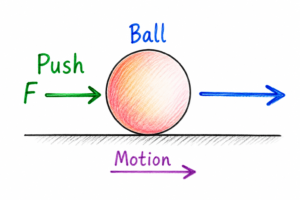
i) If force is applied on a rigid body and the body starts moving in a straight path in the direction of motion, it is called translatory motion.
ii) In this type of motion, the entire body covers the same distance in the same time.
2. Rotatory Motion
i) If a body is pivoted at a point and a force is applied on a suitable point, it rotates the body about the axis passing through the pivoted point. This motion of the body is called rotatory motion.
ii) In rotatory motion, different parts of the body cover different distances in the same time.
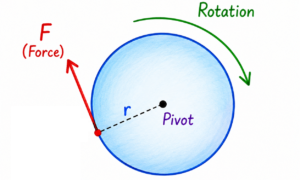
Moment of Force or Torque (Also called Turning Effect)
Symbol: τ (Tau)
Factors affecting torque:
• Force
τ ∝ F
• Perpendicular distance of force applied from the pivoted point
τ ∝ S⊥
Therefore,
τ = F × S⊥
Torque is defined as the product of the force applied and the perpendicular distance of the force from the pivoted point.
Unit:
SI Unit: Newton metre (Nm)
CGS Unit: dyne centimetre (dyne cm)
Relationship:
1 N = 10^5 dyne
1 m = 100 cm
Therefore,
1 Nm = 10^5 × 100 dyne cm
1 Nm = 10^7 dyne cm
Nature:
Vector Quantity
Types of Moment:
1. Clockwise Moment
2. Anticlockwise Moment
Clockwise Moment:
When a force is applied to a body pivoted at a point and the body moves in the direction of motion of the hands of a clock, it produces clockwise moment.
• It is negative (-ve).
• It causes inward motion.
Anticlockwise Moment:
When a force is applied to a body pivoted at a point and the body moves in the anticlockwise direction, the moment produced is called anticlockwise moment.
• It is positive (+ve).
• It causes outward motion.
Changing the Direction of Torque:
i) By changing the direction of force.
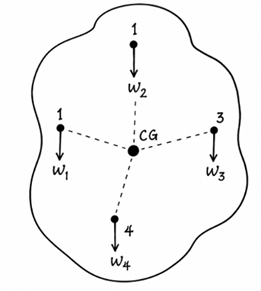
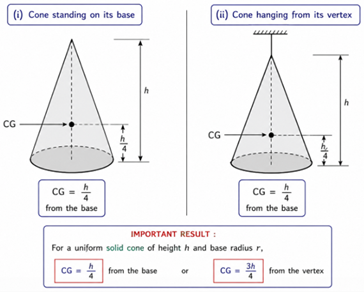
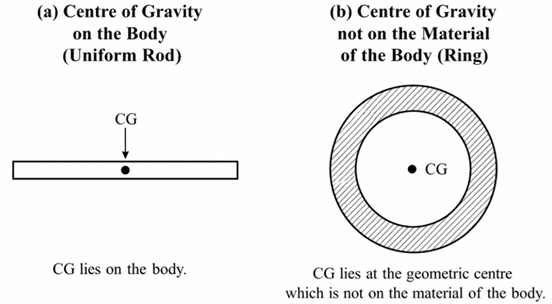
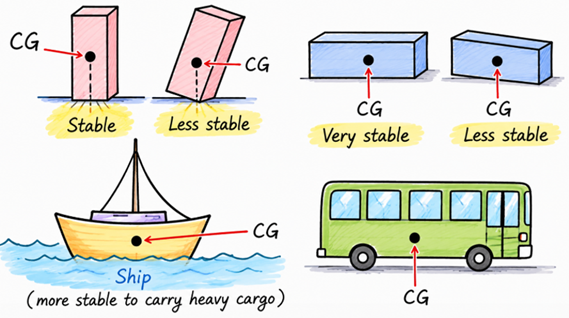
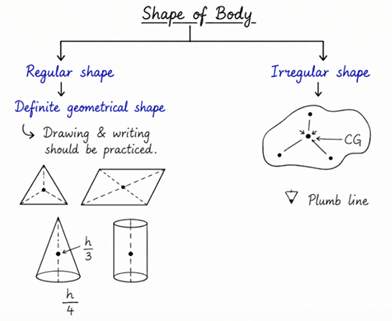
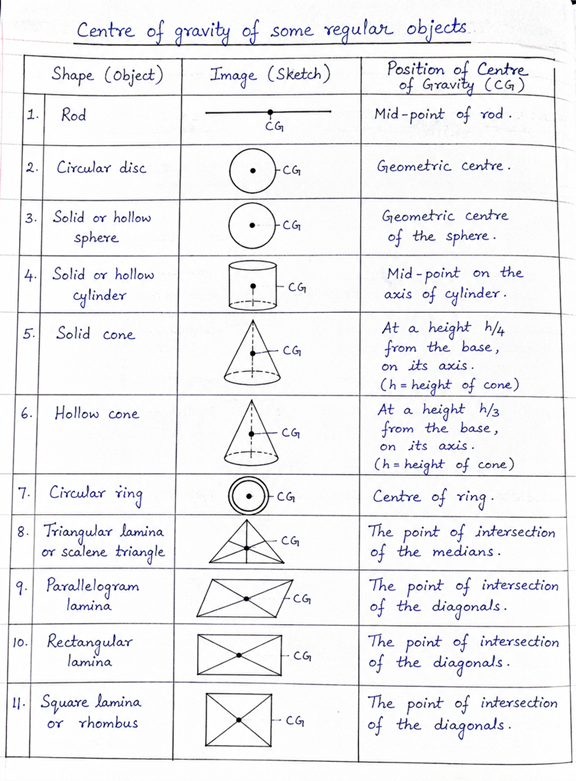
Center of Gravity
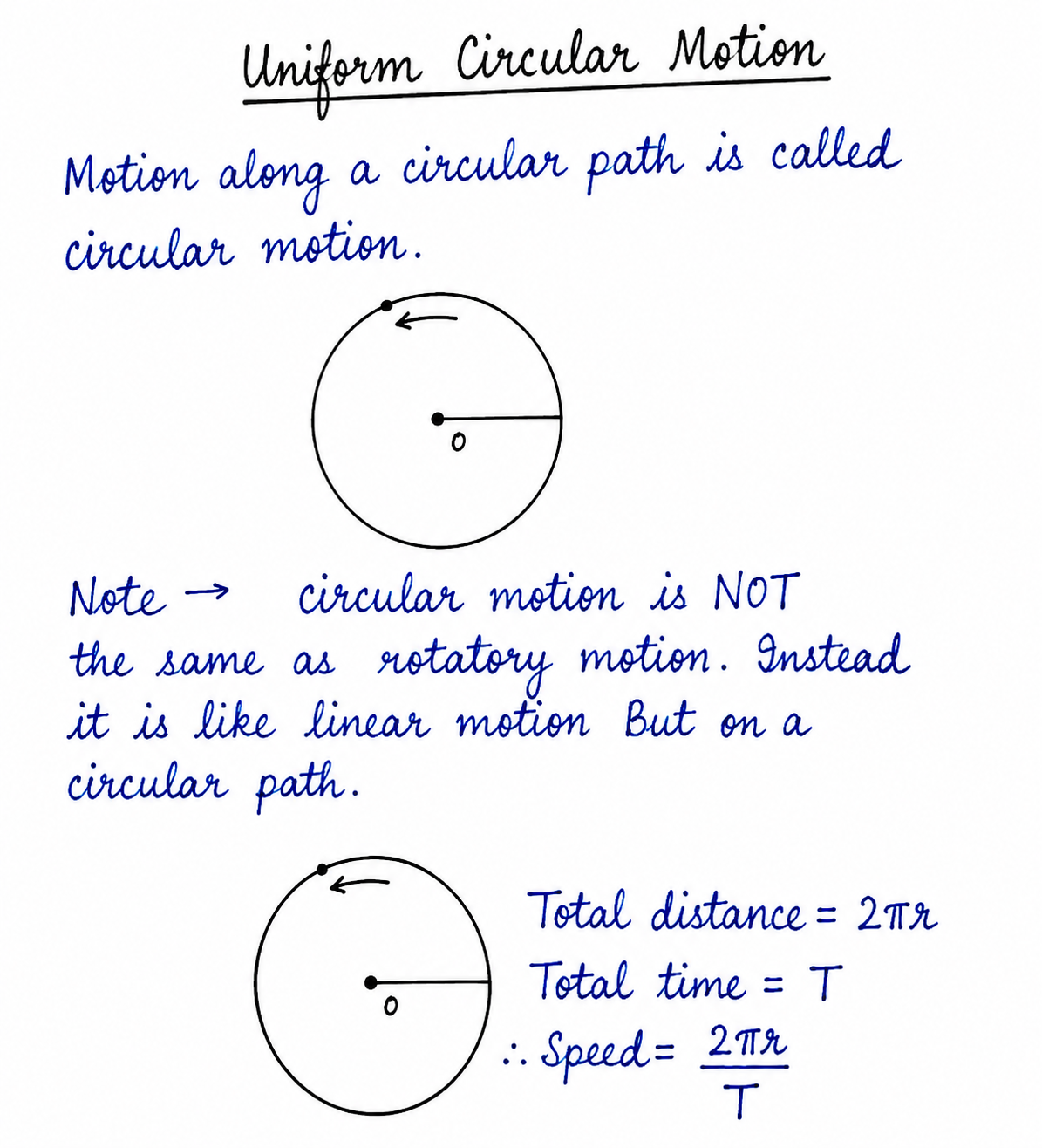
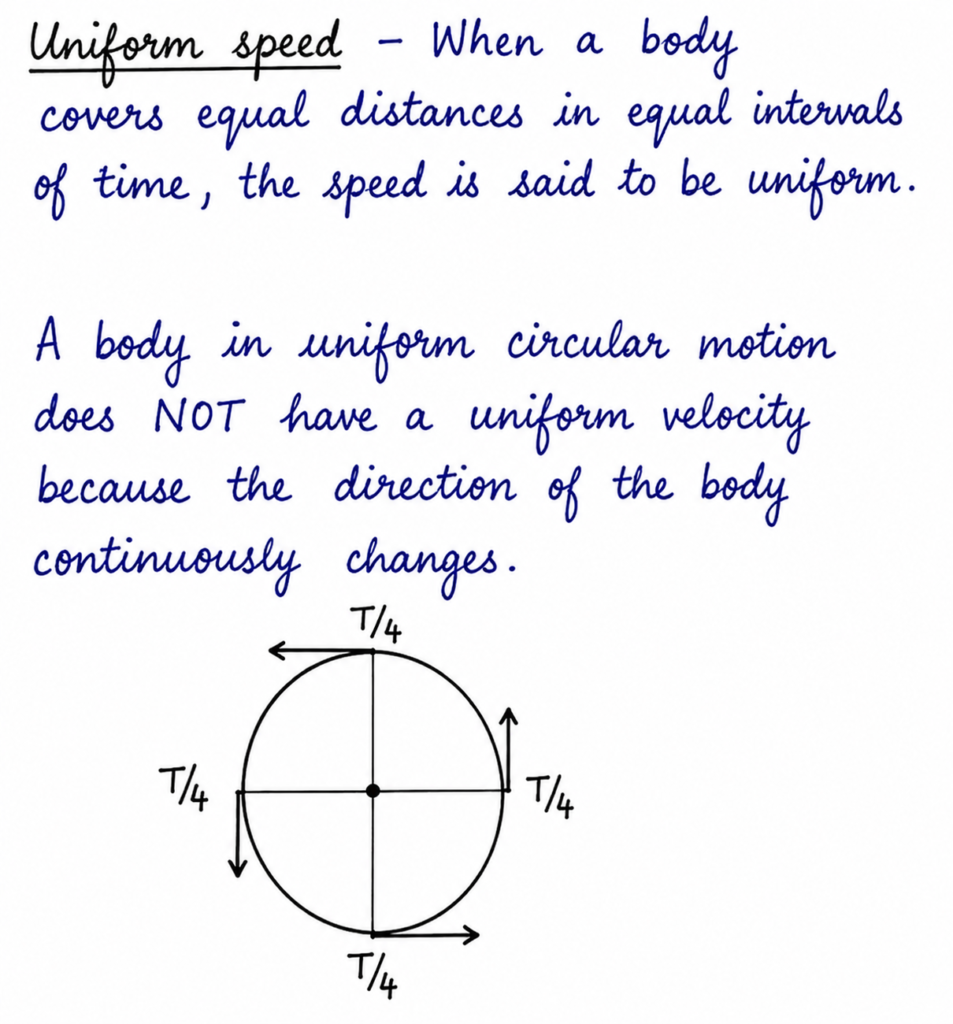
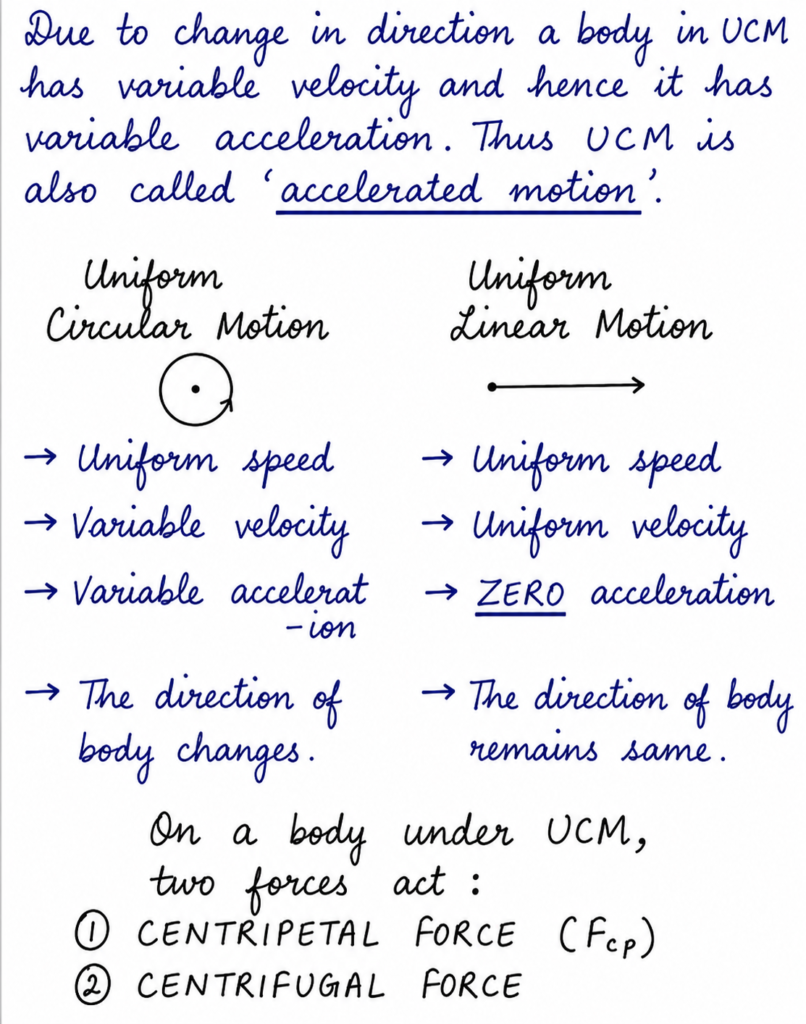
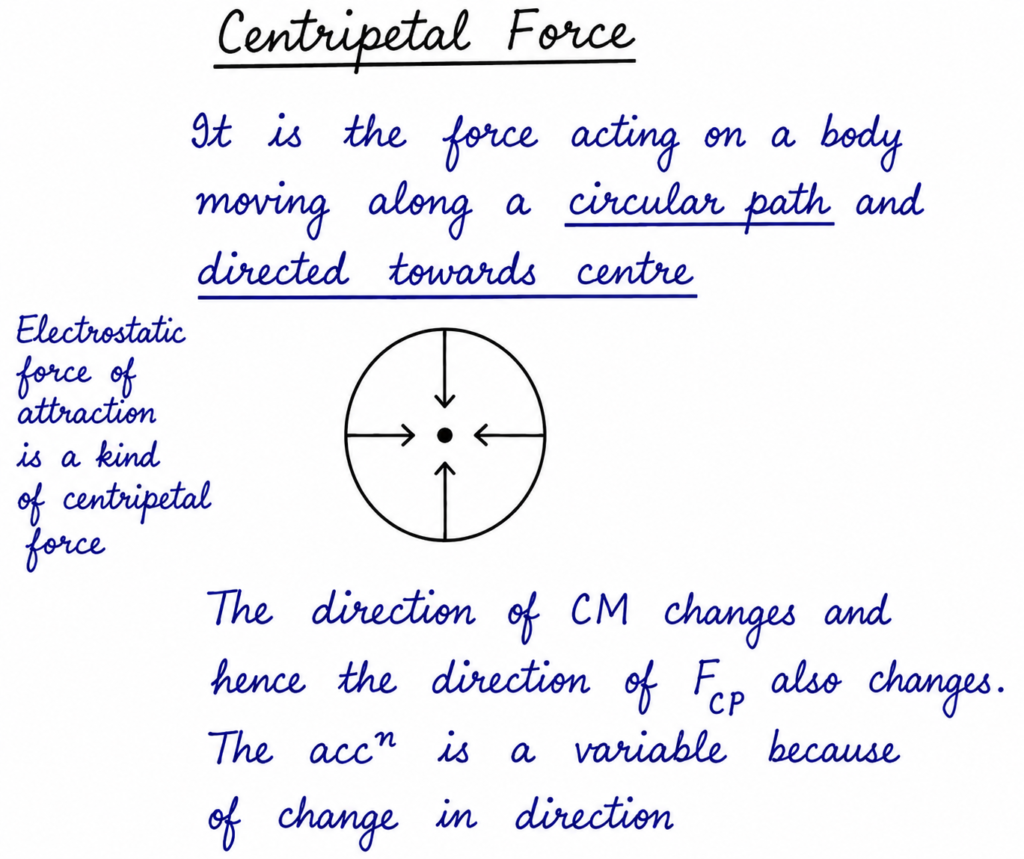
Uniform Circular Motion